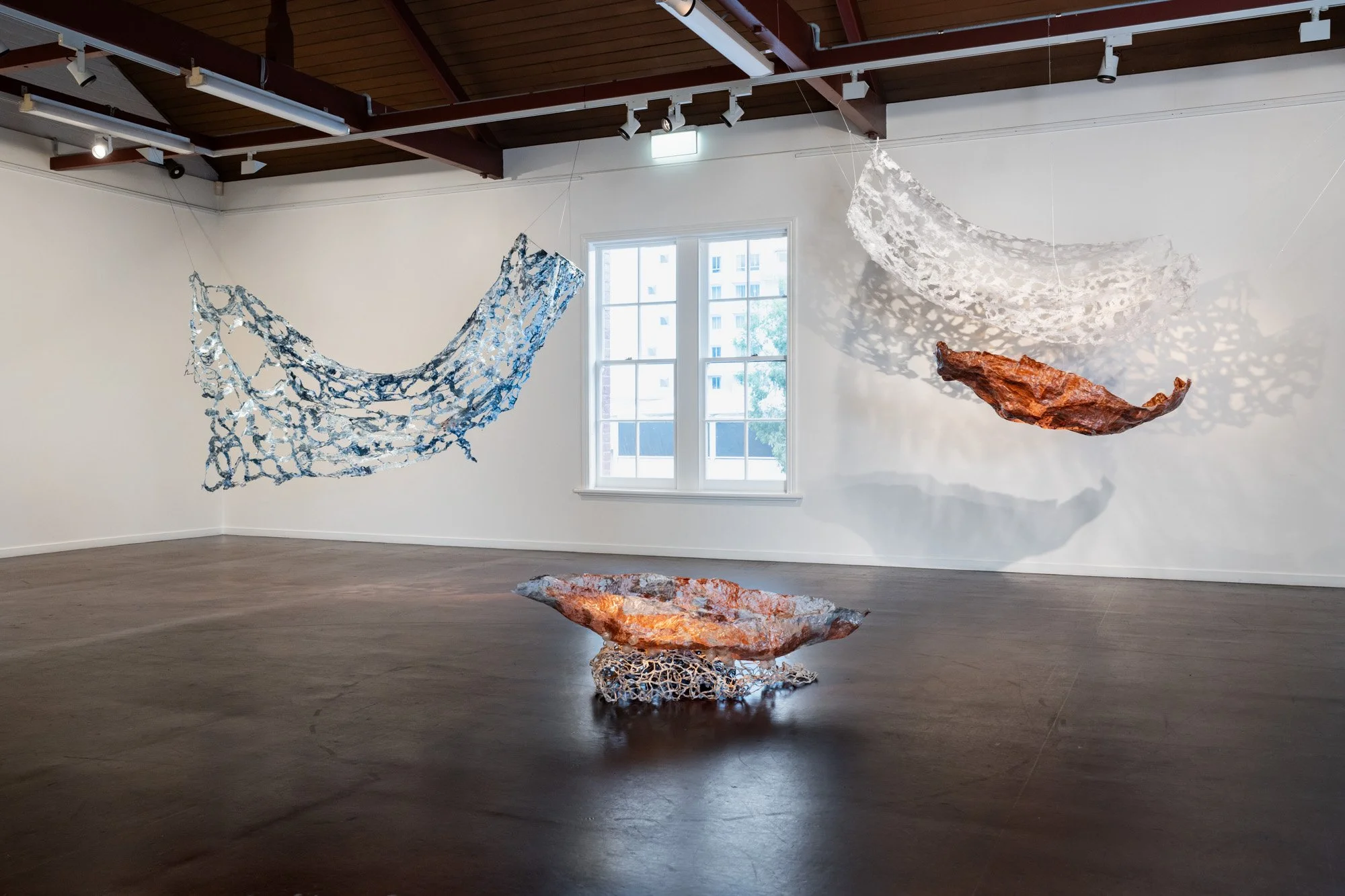
To flow – 旅路 (tabi-ji) (2026)
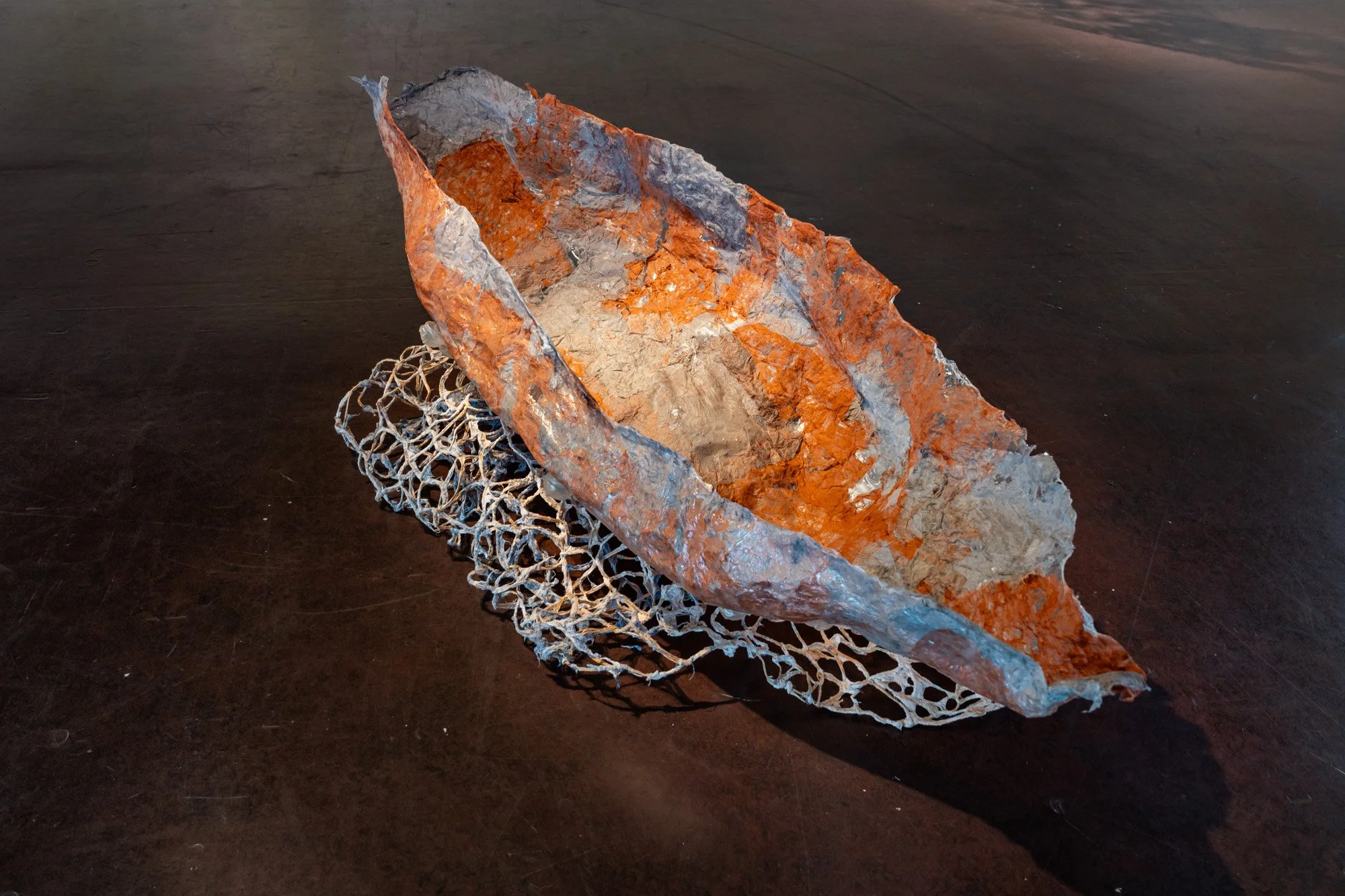
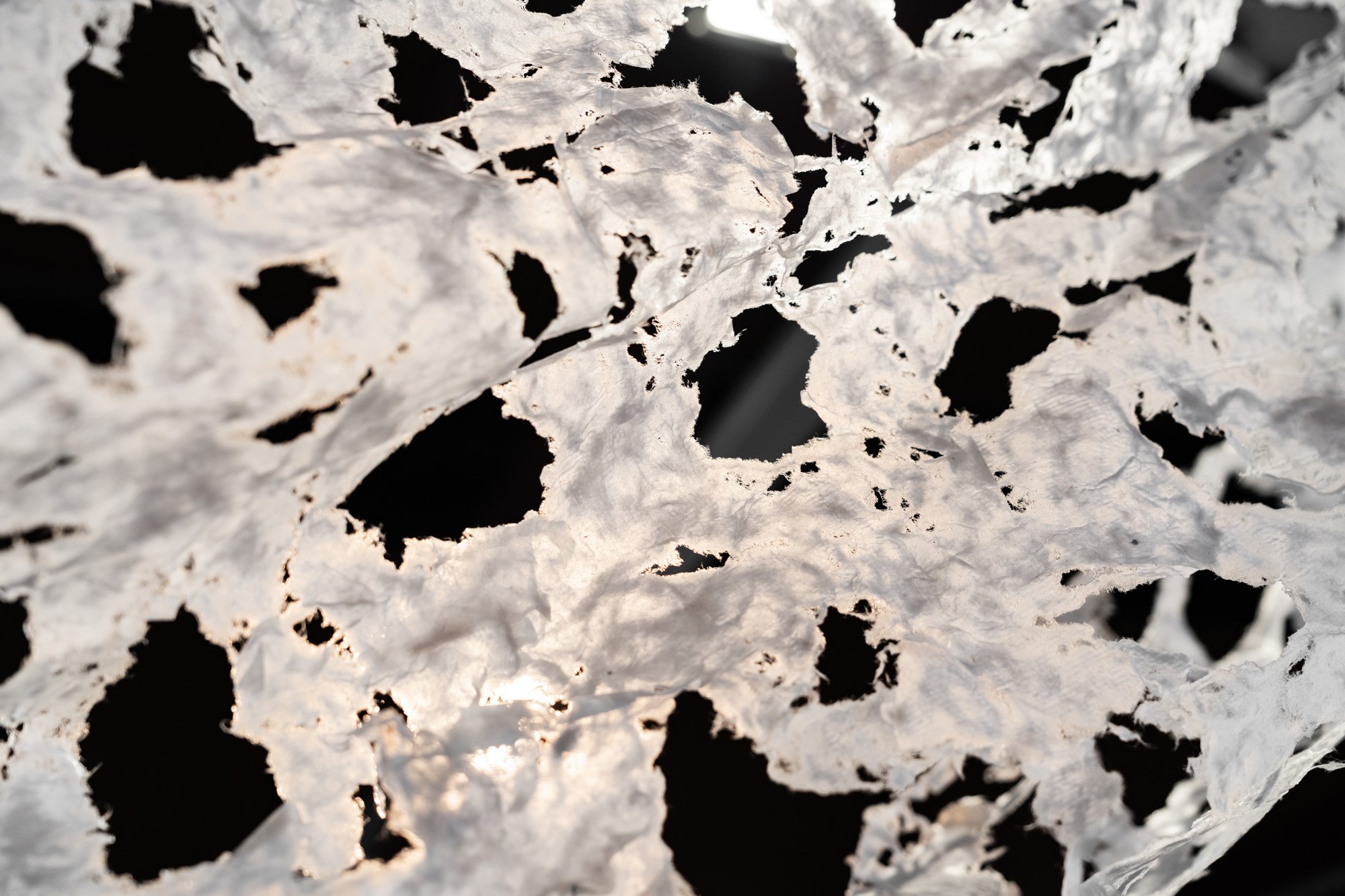
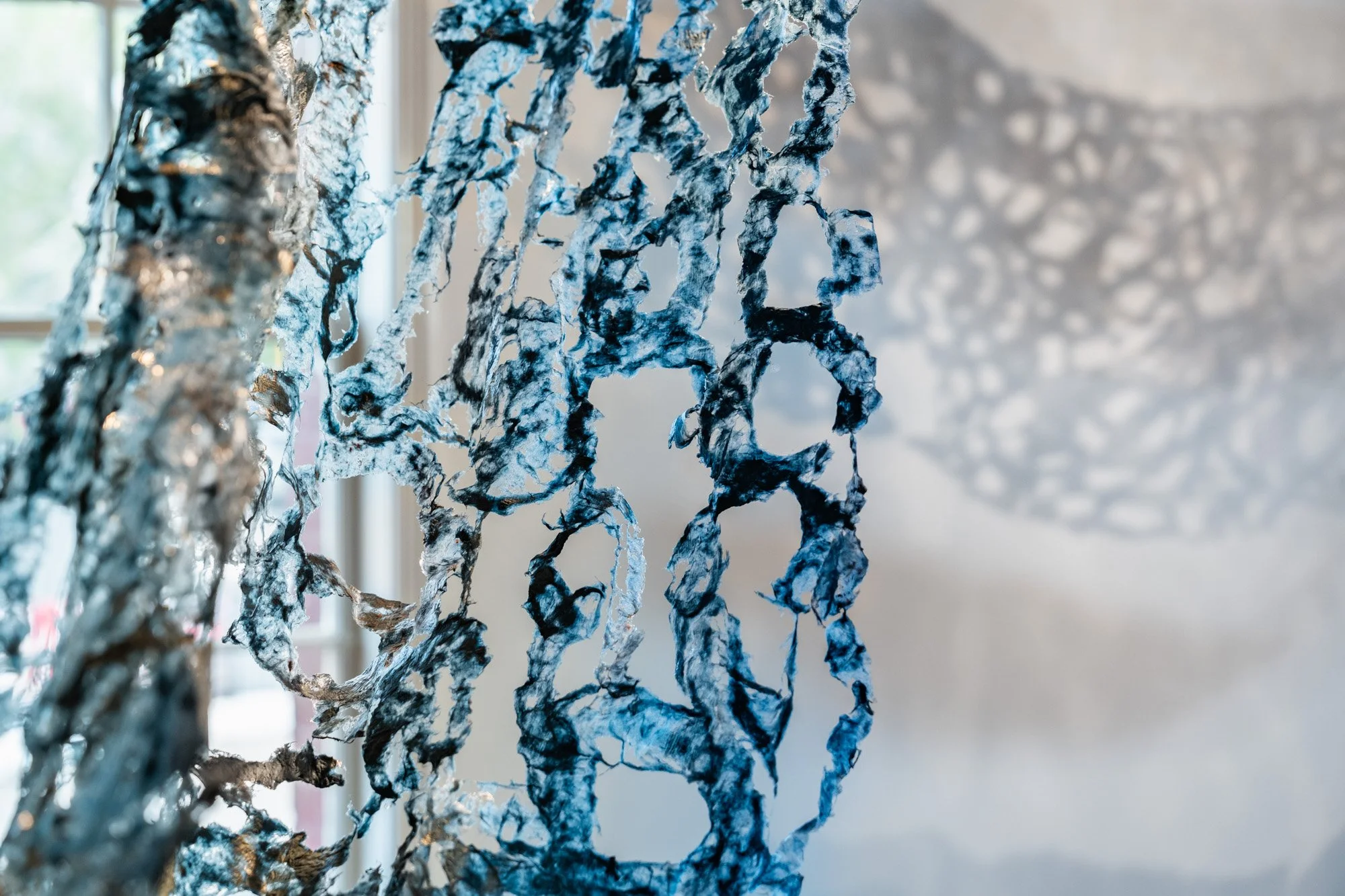
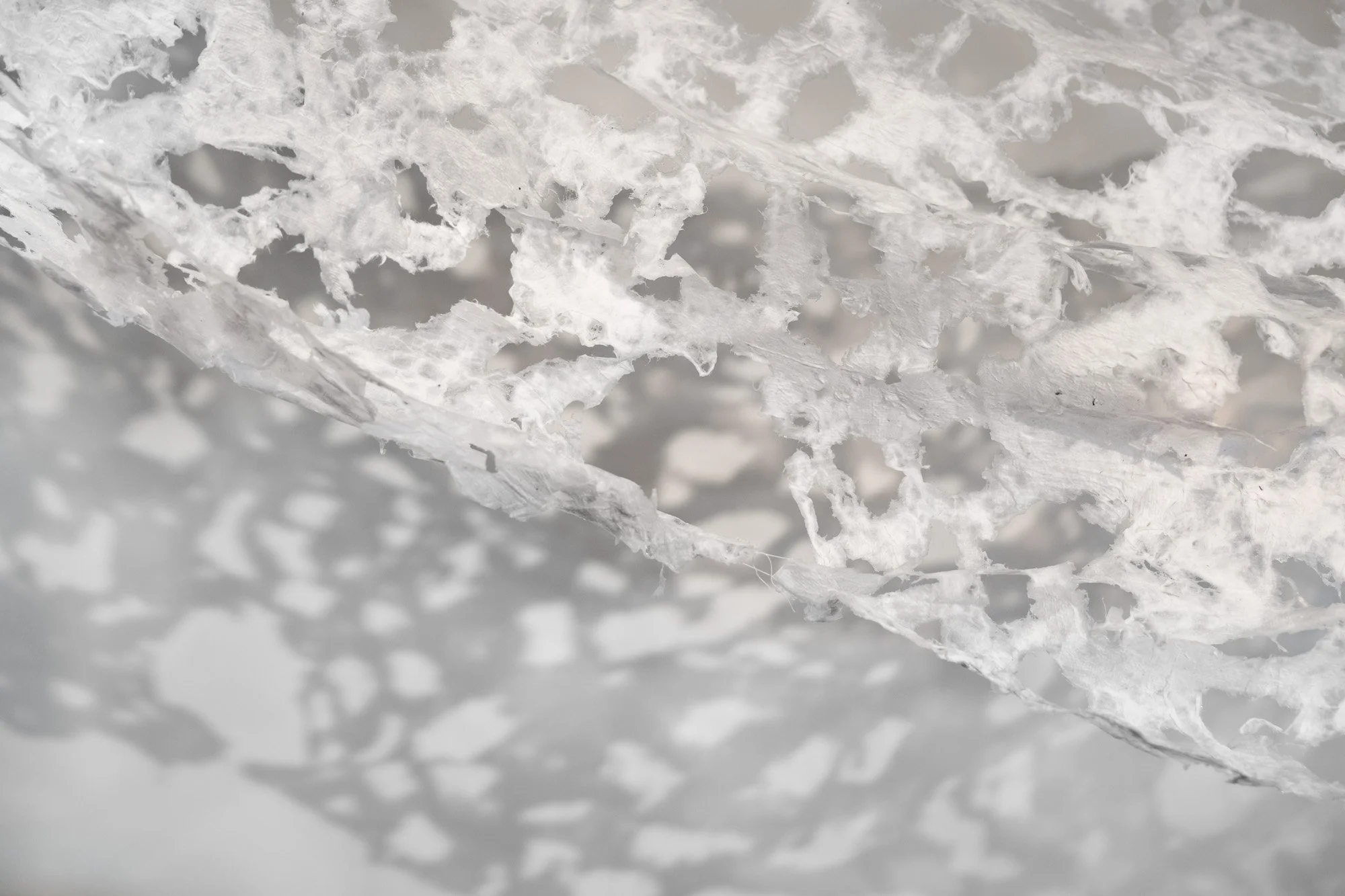
To flow – 旅路 (tabi-ji), 2026, wire, rice paper, handmade paper sheets made from family heirloom clothes
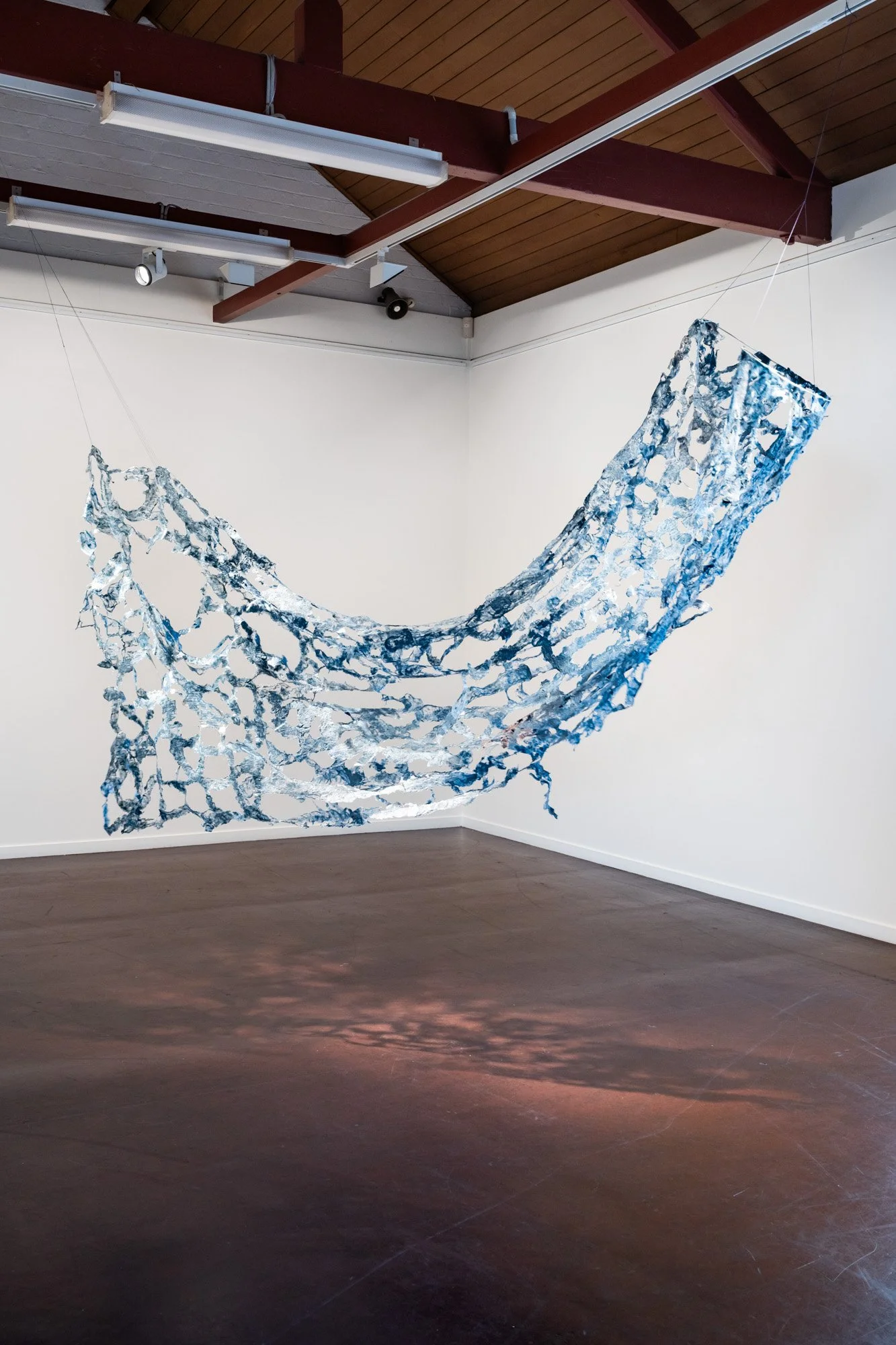
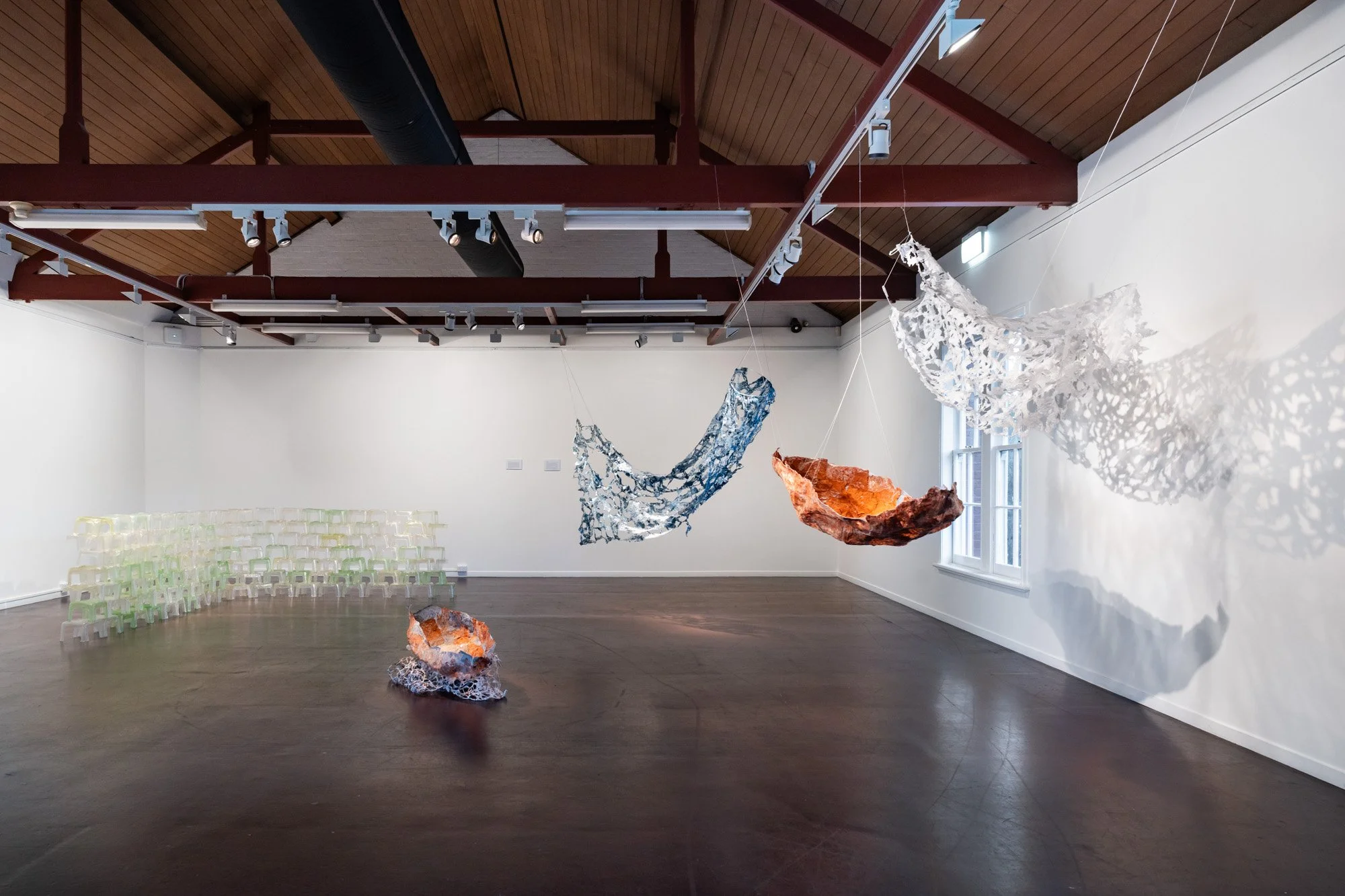
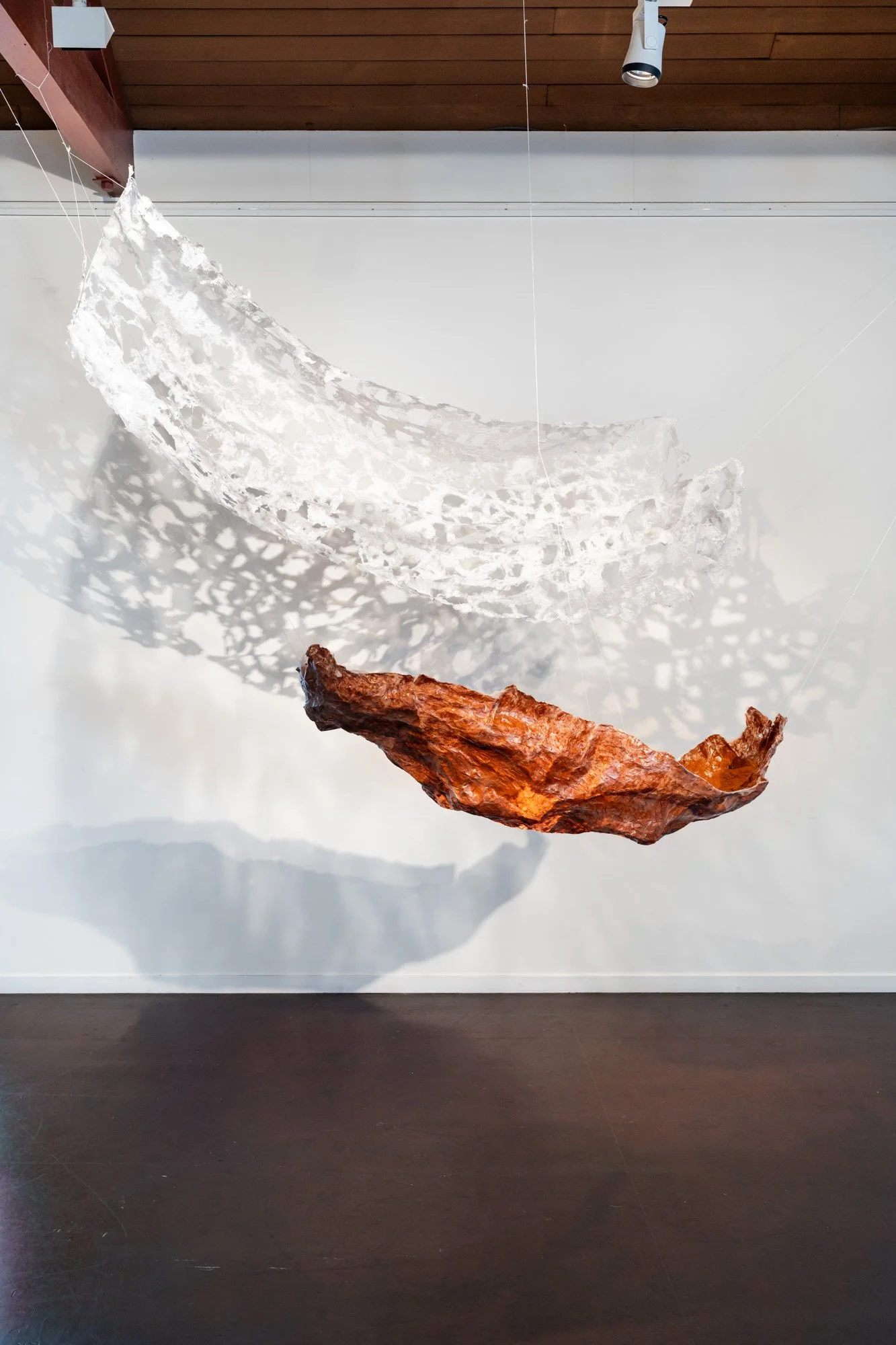
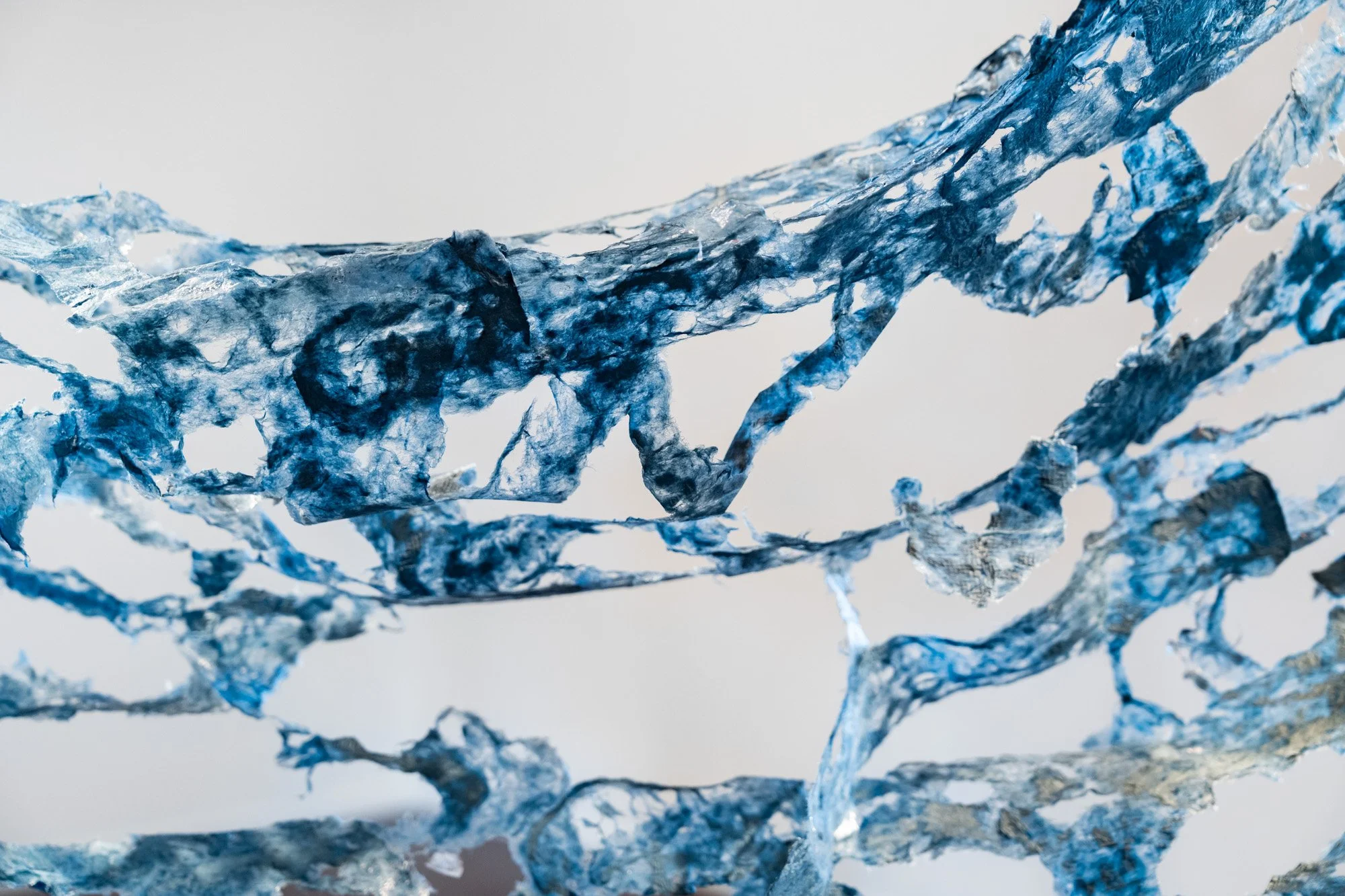
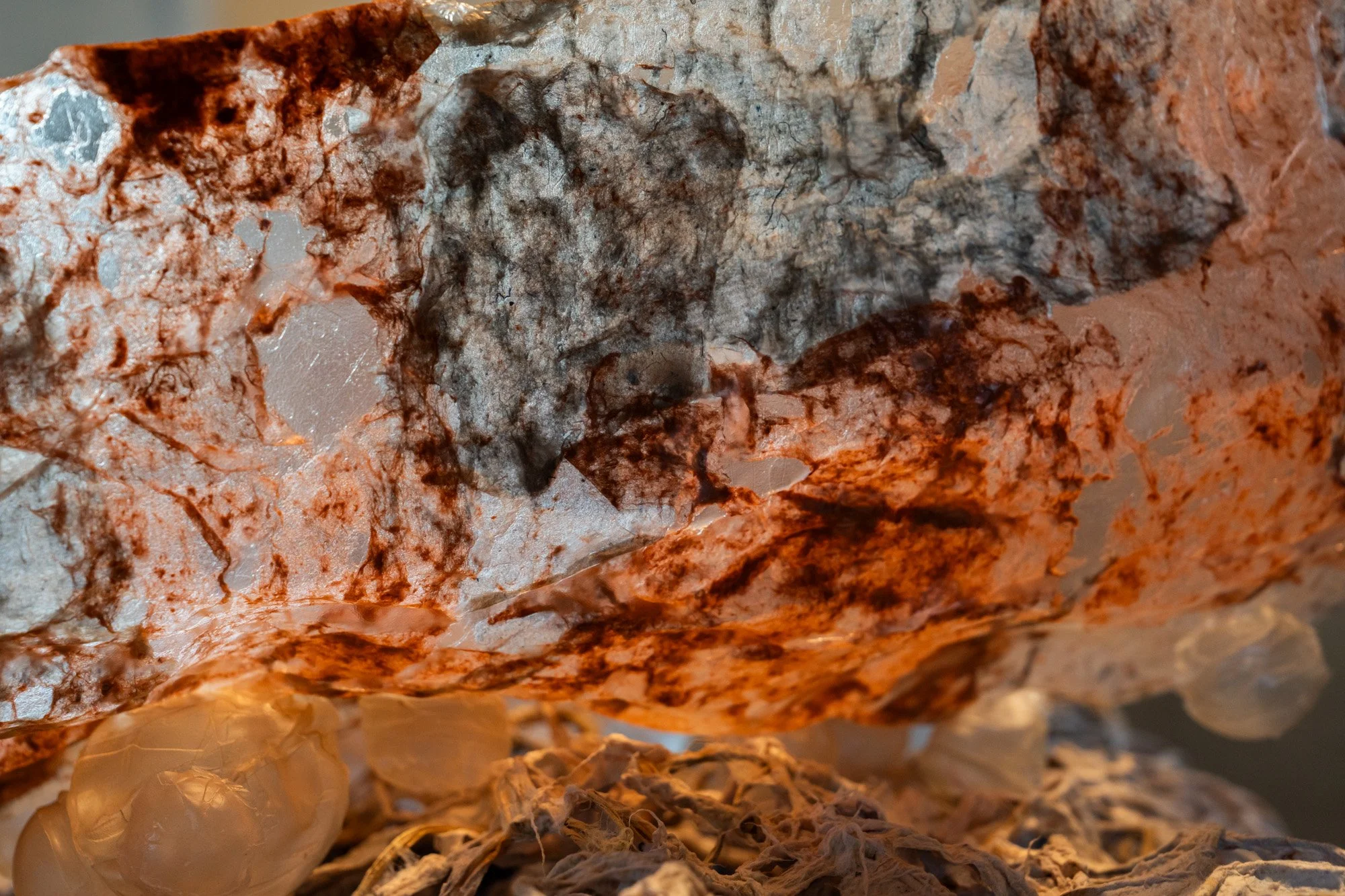
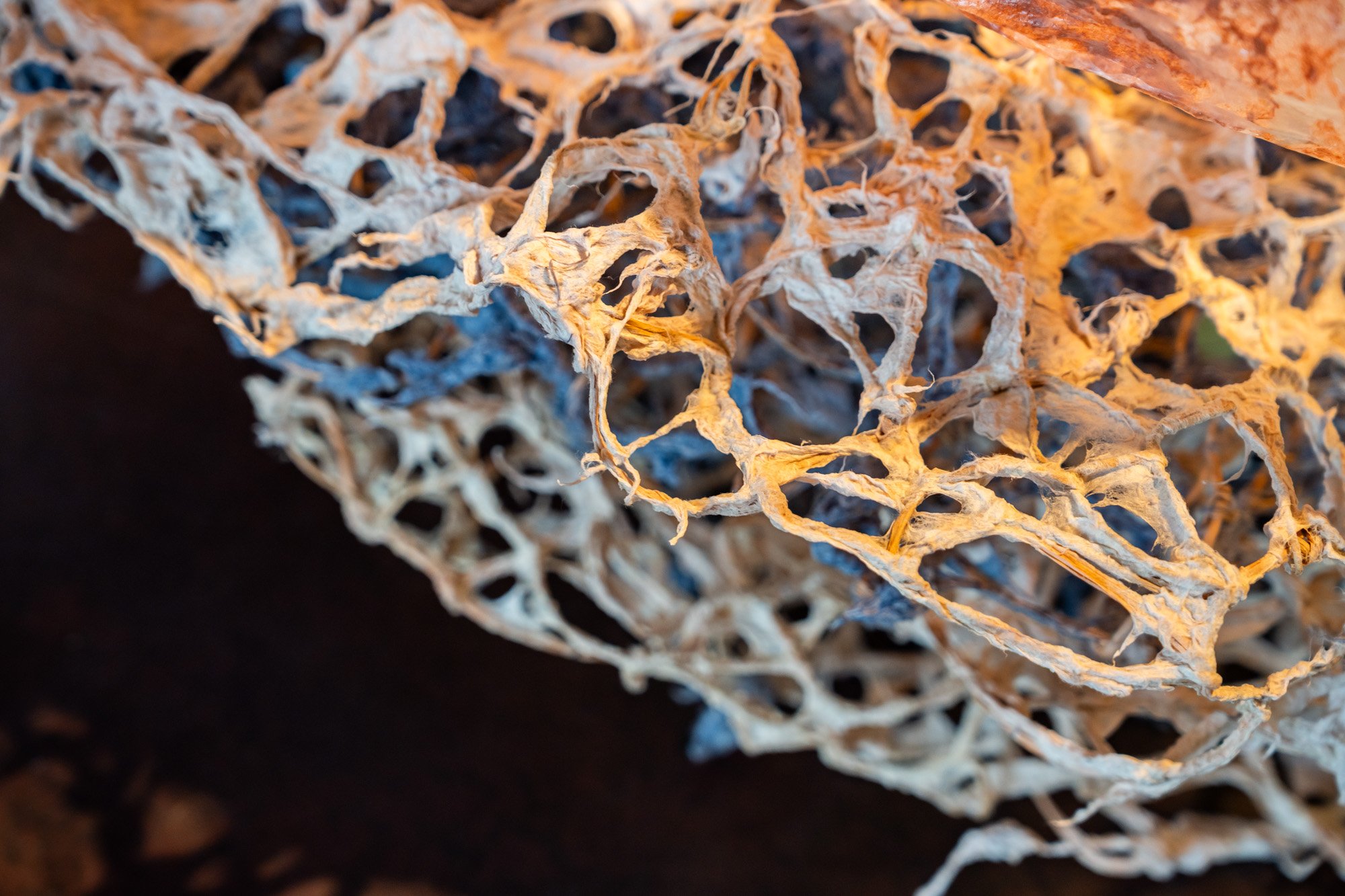
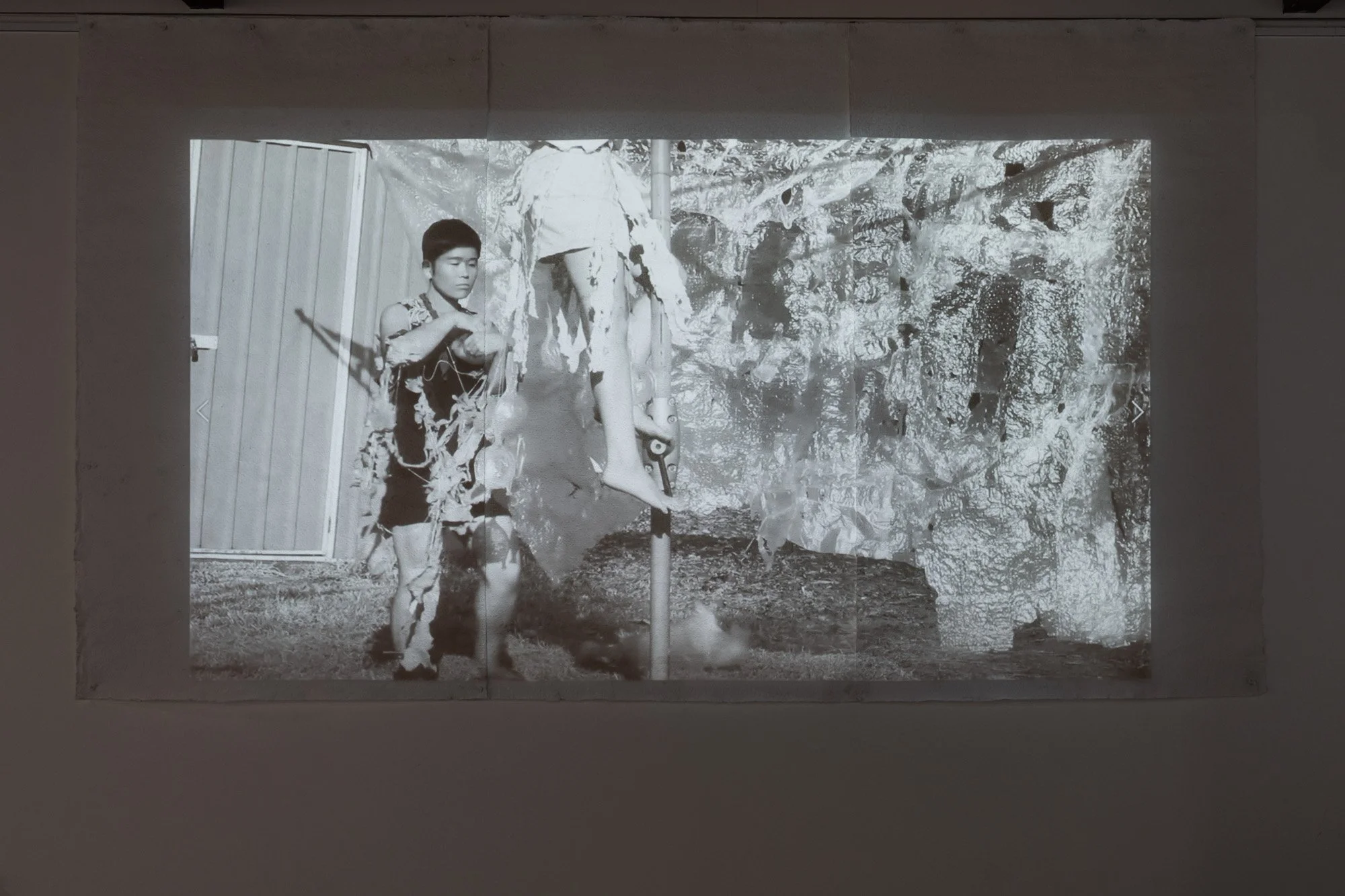
The fibrous landscape of currents, flows and boats reimagines my 旅路 (tabi-ji) — a journey of identity, relationships, and place that continues to shift through living across countries. Each element is made from garments that carried memories of home, such as a grey dress once worn by my grandmother, which I brought with me to Australia. I wore it as pyjamas during eczema flare-ups; its softness resting gently against inflamed skin. The tactile memory lives deeply within my body — the touch of the fabric returning me to a visceral sense of home. In making this work, I deconstructed these garments, beating and tearing them into fibrous pulp, which I reshaped into waterways and boats. The fibrous bodies of the boats symbolise quiet resilience within constant currents. Through materially broken down and reformed, memory continues to echo and move forward. In dialogue with Tamas-Cao’s stylistic language, the work activates a material conversation between our practices. Together, 旅路 reflects migratory identity — constantly breaking and becoming — like paper boats drifting through a sea of pulp, where cultures, memories, and ways of living dissolve and reform.
This works was shown at a paper artists’ group show with Rosemary Tamas-Cao and Laurent Milton: ‘Pulping Sheathes'‘at Ipswich Community Gallery.
Photo Credit: Louis Slim
Excerpt of Exhibition Text by Emily Ferrando
Pulp, slurry, mould, deckle.
To the contemporary ear, the labour of papermaking has the cadence of ancient poetry or perhaps the churning of digestion. For millennia, the chewing of paper’s fibres has coexisted alongside the chewing of words, flavours and stories that bind communities and civilisations. Paper often forms the invisible backbone of an artwork that provides a foundation that is built upon and simultaneously concealed. As both an archive and a vessel of seen and unseen histories, paper in its many forms holds rich collective memory.
Through their exploration of the material labour and tactile memory of paper, three artists share their embodied practice that reflects their connection to place, family and culture. Pulping Sheaths considers an interiority to language, labour and lineage through approaches in papermaking that weave traces of the artists’ bodily experience of making within each work. Bringing together Kanako Enokida, Laurent Milton and Rosemary Tamas-Cao’s individual explorations of the possibilities of the medium, this exhibition seeks to foster a digestion of cross-cultural learning, performance and collaboration for both artists and the community.
Enokida’s installation 旅路 (tabi-ji) interrogates both the visible and immaterial tactile memory and performance in paper. Drawing upon the tradition of rag paper, where discarded natural fibres were collected to be torn and beaten into paper pulp, Enokida uses her own favourite clothes from home to form paper as sites of remembering and breakage. In recognition of our bodily connection to the garments that clothe us, Enokida’s beloved pulped dress is akin to her own skin pressed into the work, woven with memories, skin cells and experiences. Enokida considers her artistic labour as a performance within itself, with the repetitive work of papermaking symbolising the constant fracturing of her concrete sense of identity and connection to place.
Since her migratory journey from Japan, Enokida has remained in a flux of becoming and rebecoming, and of breakage and healing through her practice. This repetitious labour is also reflected visually in delicately cascading paper fibres, forming the liminal body of water where identity and self are continually reformed. While Enokida breaks and tears at the material remnants of her history, their fibres form new, delicate constructions that are vessels of the in-between.
Paper, performance and materiality punctuate the nature of collaboration in this show, where the process of papermaking is marked with bodily experience to form tactile sites for digesting memory and histories. What was one simply regarded as an essential medium to record and document, the materiality of paper is a tactile thread to lost worlds, places and experiences. While perhaps considered an increasingly antiquated material amidst global efforts of digitisation, these artists highlight the importance and potential of paper as a site of deconstructing memory.