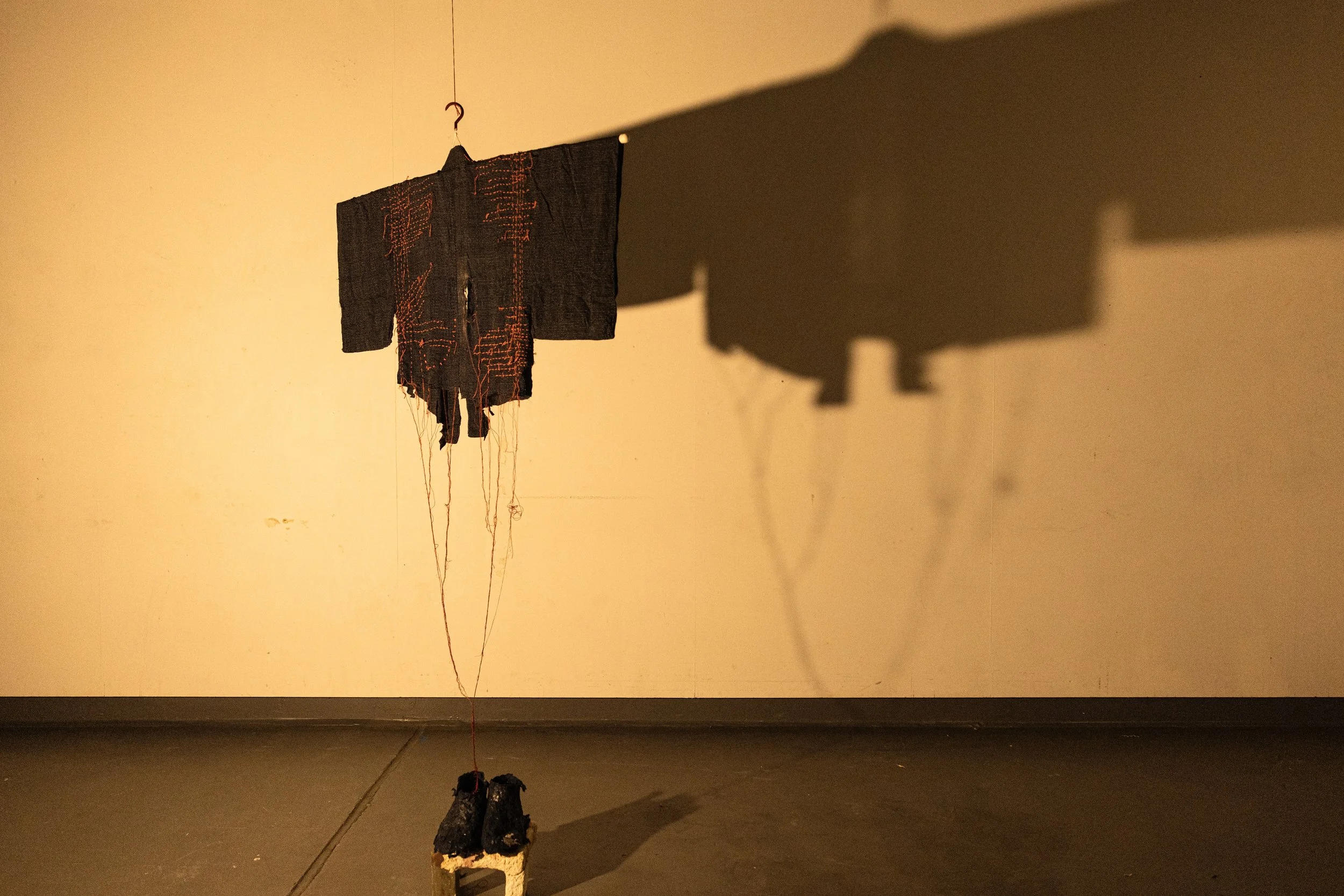
the state of being (2023)
My mother’s kimono, threads, a pair of paper shoes made from the kimono, assembled pieces of wood…
Image credit: Patricia Olazo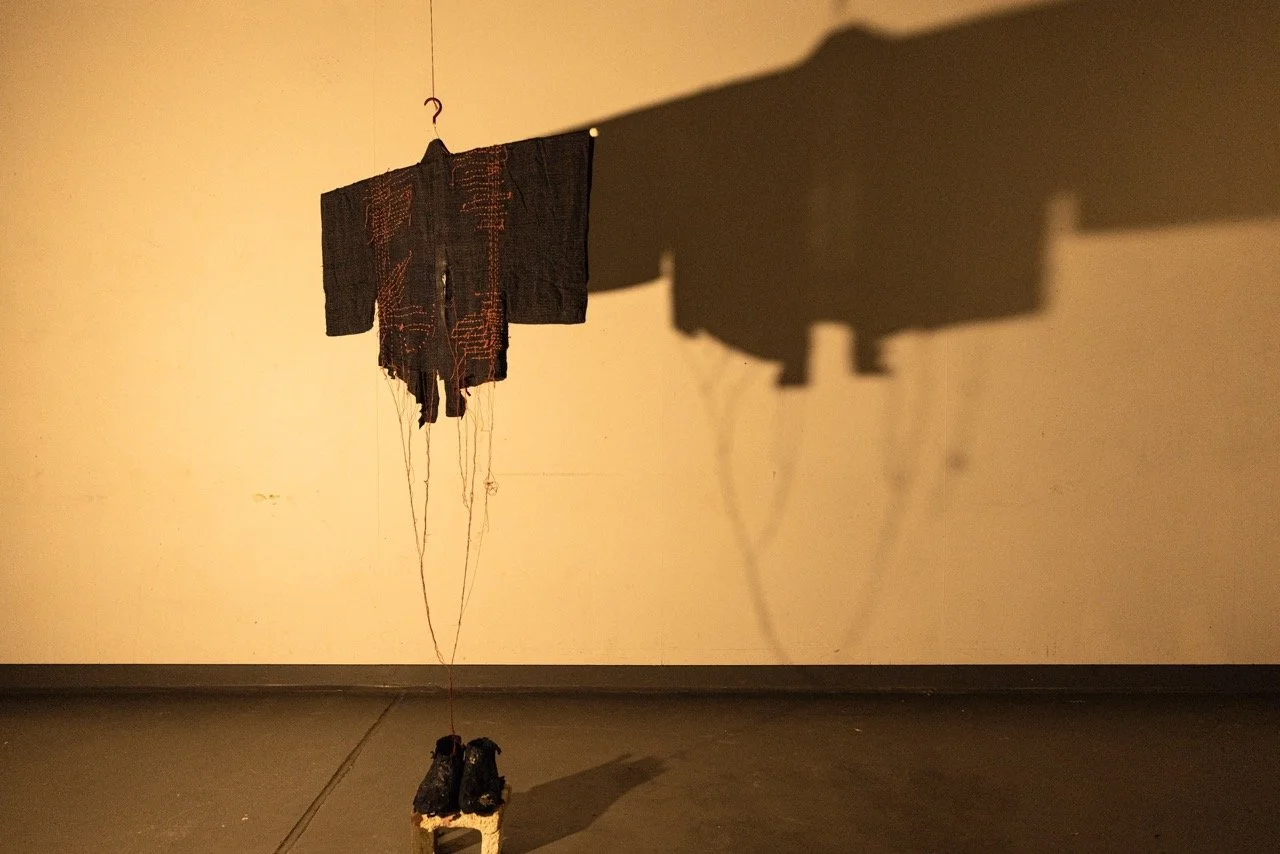
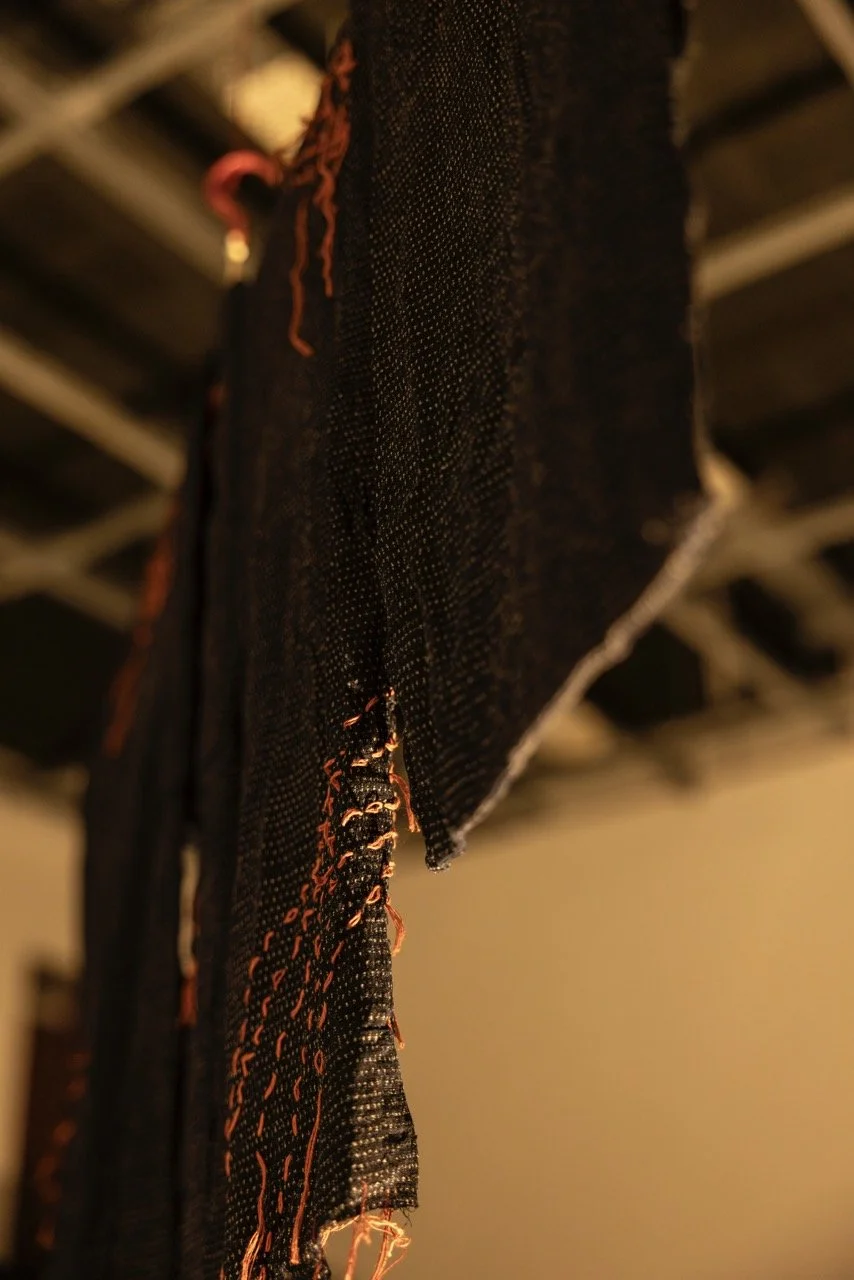
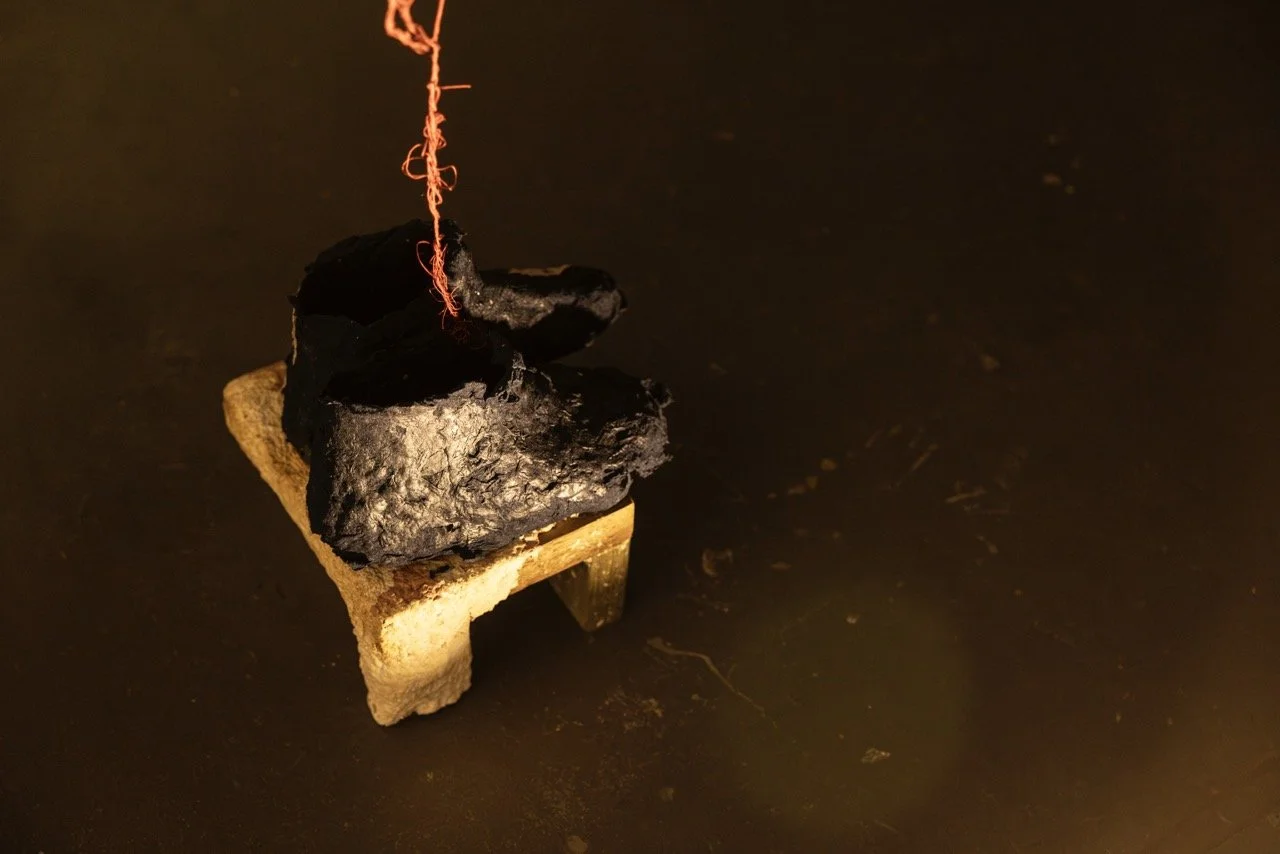
The red threads on the kimono trace my scars and wounds caused by my eczema, as well as blood and generational trauma that deeply sit within my body and identity. This is sashiko stitching, which is a traditional Japanese way of mending and reinforcing clothes.
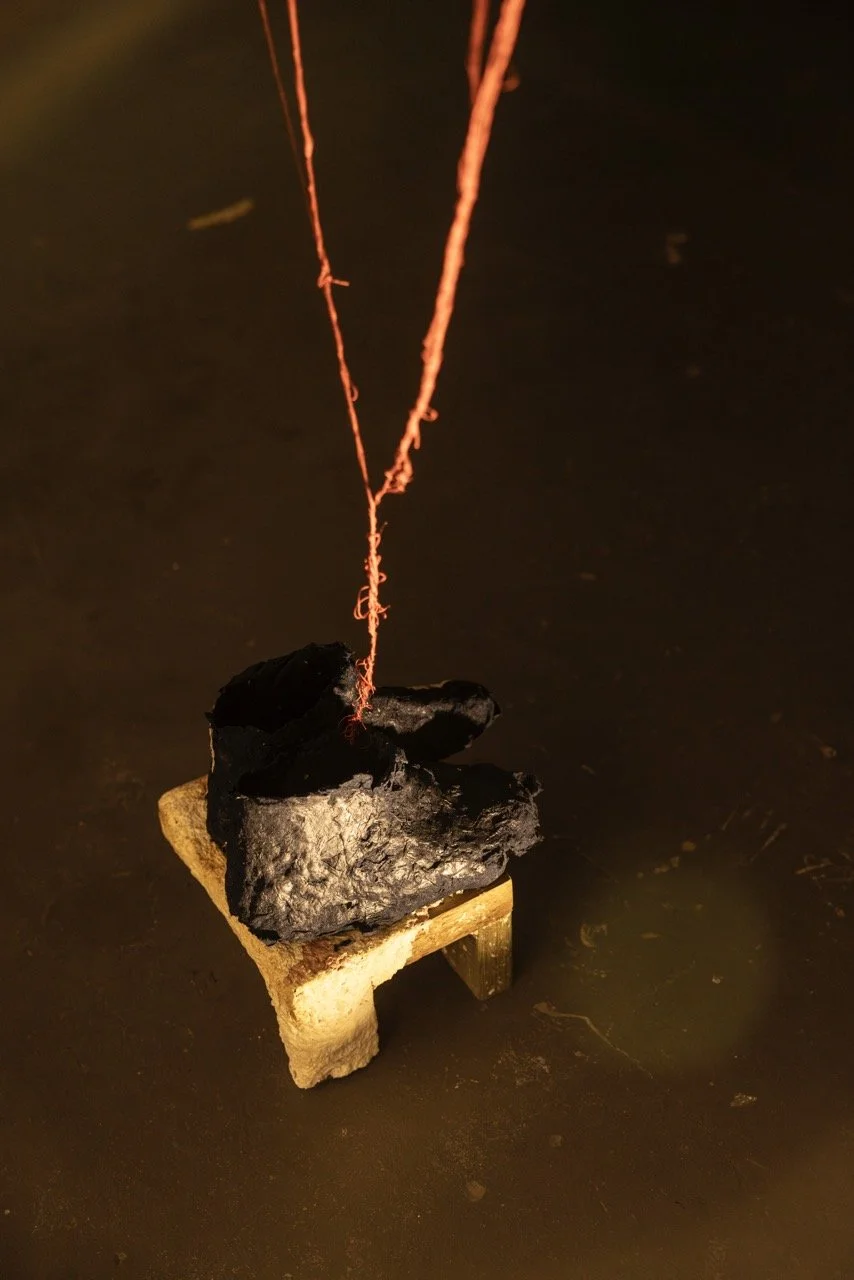
The shoes are made from pulp and fabric from the kimono, cast from a pair I bought in Tasmania. Beating the kimono into pulp made me oddly emotional…I thought of my family, history, and tradition. It was just after completing the work that I came across the term “tactile memory”; my body remembered the time when I was in those soft materials made with care, when I felt safe and comfortable.
Altogether, it represents transformation, from the structured to the abstract, from the traditional Japanese to the contemporary. However, what is missing is in-between, the invisible dilemma. Being placed on the stool which stands on fragile balance, it strives to reach out to stay connected with both the land where I am in, and the culture I am coming from.
This work is my ongoing exploration for the process of reforming identity, as well as power dynamic of narratives. Since moved to this country, I have encountered racism against “Asian woman” in so many different forms. The common threads are that they came from similar stereotypes…thick accent, quiet, submissive, always available to men…the fictional identity that is created only to manifest the power of the westerners, the civilized. This inspired me to create a work that gives voice to my side of the story. The personal story of a migrant which is too often not heard or seen.
I moved to this country in 2019, from my hometown in Japan called Kamakura. Since, I have been witnessed and been through societal challenges of migrants, migration, and the process of reforming identity…it is like the layers of tensions…the tensions of living in this ‘inbetween’ space. I sit at a unique place being both ‘a part of’ and ‘apart from’. My cultural understandings of life, values and norms, in other words, my ways of knowing and being, have been challenged and re-formed through living in the societal norms I am now immersed in. My sculpture has two layers: my personal experience and politics of the cultural identity.